Edu Email Generator — What Actually Works in 2026 (Honest Answer)
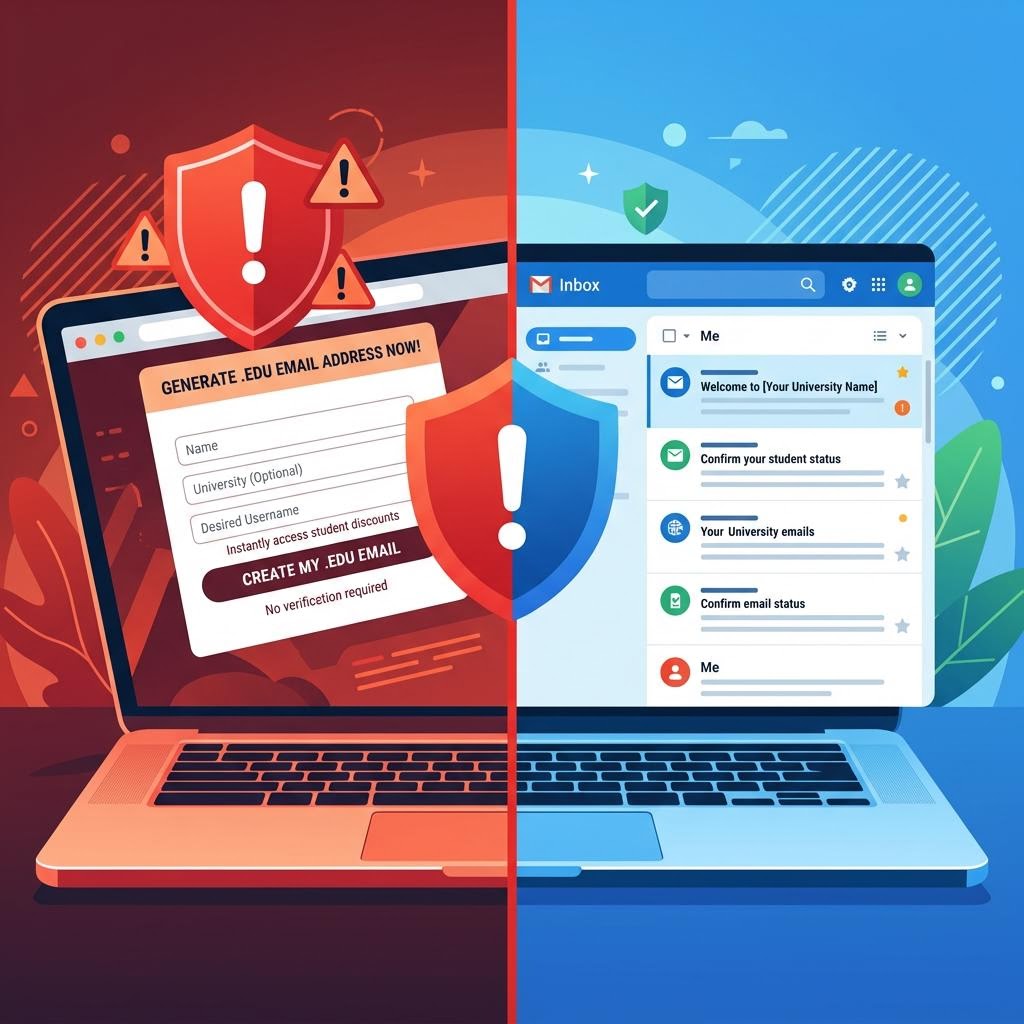
Search for "edu email generator" and you'll find dozens of sites claiming to give you a free .edu email address — with access to student discounts on Spotify, Apple, Adobe, YouTube Premium, and more. The appeal is obvious. But most of these services don't do what they claim.
Here's the honest breakdown: what .edu email generators are, why most fail, what actually works, and what the risks are.
What Is a .edu Email Address and Why Do People Want One?
What .edu Means
The .edu domain is restricted to accredited educational institutions in the United States. A real .edu email means you are (or were) affiliated with a college or university — and you have proof of that.
Why Students Want Them
A verified .edu email address unlocks significant discounts:
| Service | Student Discount |
|---|---|
| Spotify | 50% off Premium |
| Apple | 10–15% off Mac and iPad |
| Adobe Creative Cloud | Up to 65% off |
| YouTube Premium | ~50% off |
| Amazon Prime | 50% off (Prime Student) |
| Microsoft 365 | Free via many schools |
| GitHub | Free Pro (GitHub Student Pack) |
| Notion, Canva, Figma | Free Pro tiers |
These discounts are verified using .edu email addresses — you enter the address, receive a verification code, and the service grants access.

Do Edu Email Generators Actually Work?
The honest answer: mostly no. Here's why:
What These "Generators" Actually Do
Most edu email generator sites do one of three things:
- Provide a shared inbox on a registered .edu domain — Some sites have registered their own
.edudomains (which is possible, though increasingly difficult) and offer shared inboxes. The problem: these shared inboxes are used by many people simultaneously, and student discount platforms have already identified and blocked them.
- Sell access to existing student accounts — These are compromised or resold accounts. Using them is against the terms of service of every platform and potentially illegal.
- Just lie — Many "generator" sites simply don't work and are designed to harvest your information.
Why Platforms Block Them
Amazon, Spotify, and Apple all maintain blocklists of .edu domains they recognize as fake or shared-inbox providers. As of 2026, the major discount platforms have become very good at identifying non-genuine student emails:
- They cross-reference
.edudomains against accredited institution databases - They monitor signup patterns from known shared-inbox addresses
- Many now require additional student verification (ID, enrollment document)

What Actually Works for Student Discounts
Option 1 — If You're a Current Student
Use your real school email. Every accredited institution provides students with an email address. Check with your school's IT department if you haven't received yours.
Option 2 — If You Were Recently a Student
Many .edu addresses remain active for 6–12 months after graduation. Check if yours still works by trying to log in.
Option 3 — Community College Enrollment
Many community colleges allow online enrollment for low-cost or free classes. Enrolling (even in a single free or low-cost online course) gives you legitimate .edu access. This is the most common legitimate path for people who are not currently enrolled at a university.
Option 4 — Use the Discount Alternatives
Many student discount platforms (SheerID, UNiDAYS) also accept other proof of enrollment — not just email. Driver's licenses for under-25s, enrollment documents, or even pay stubs from student employment.

Where Temp Mail and Edu Email Overlap
Some people use temp mail services as a stepping stone — to sign up for platforms while waiting for their real student email to activate, or to test which services accept which email types.
inbox Me is useful for:
- Testing whether a service sends verification codes (before committing your real email)
- Signing up for free tiers of services while you wait for student discount approval
- Protecting your real email while exploring platforms
inbox Me generates real, working email addresses that receive verification codes instantly. It is not a .edu email service — it is a general-purpose temporary email service for privacy and spam protection.
Risks of Using Fake Edu Emails
Terms of service violation: Every student discount program explicitly prohibits non-students from using student pricing. Discovery can result in account termination and reversal of discounts.
Account bans: Spotify, Adobe, and Apple all actively audit student discount accounts. If flagged, your entire account (including any purchases) can be locked.
Identity risk: Many "edu email generator" websites are scam operations. They capture your personal details and may sell your data or attempt phishing.
Frequently Asked Questions
Can I get a free .edu email address without being a student?
Not from a legitimate source. Edu email generators either use blocked shared inboxes or are outright scams. Community college enrollment is the most accessible legitimate path.
Do student discounts actually verify .edu emails?
Yes — all major platforms (Spotify, Adobe, Apple) have improved verification. Many use third-party verification services that check enrollment status beyond just the email domain.
Is using a fake .edu email illegal?
Potentially, depending on jurisdiction. It is always a violation of the platform's terms of service, and in some regions fraud statutes could apply to intentionally misrepresenting student status.
What can temp mail help with for students?
Temp mail is useful for testing services, avoiding spam during the enrollment process, and protecting your real student email from exposure. See our guide: Is Temporary Email Safe?
Related Guides on inbox Me
- Is Temporary Email Safe?
- Is Temp Mail Illegal?
- Temp Email for Students
- Sign Up for Free Trials Without Spam
- Common Myths About Temporary Email